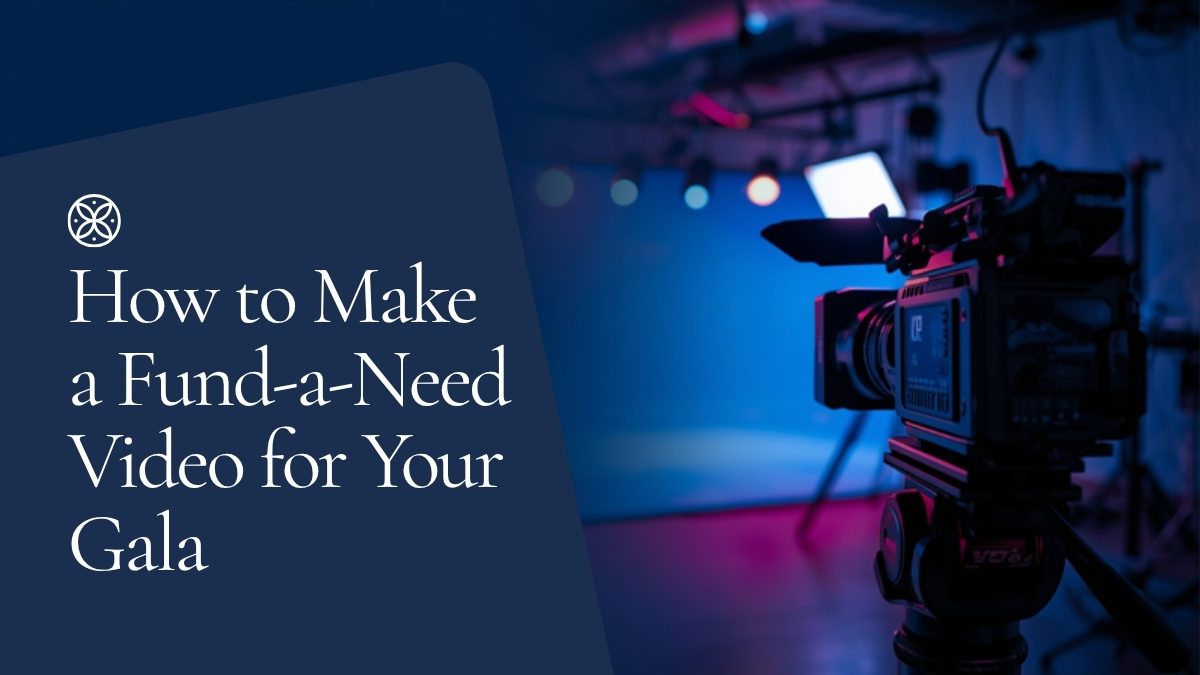
A fund-a-need video is a short story, about two minutes and never more than three, played right before the paddle raise, that shows guests one specific need and the person it helps. End it on the ask and hand the room straight to the auctioneer. The strongest fund-a-need videos are planned 10 to 12 weeks out, filmed at your real program sites, and cut so the same footage keeps working after the gala.
This guide is part of our nonprofit video production series. It covers the appeal video itself. If you also want the evening filmed, see event video production.

What is a fund-a-need video?
A fund-a-need video (also called a paddle raise video or appeal video) is a short film shown to gala guests just before the fund-a-need, the part of the night where guests raise paddles to give at set levels toward one stated goal.
It isn’t a recap of your year or a tour of every program. It makes one case: here is the need, here is who it helps, here is what your gift does tonight.
How long should a fund-a-need video be?
About two minutes, and never more than three. CharityAuctions.com CEO Tom Kelly recommends “two to three minutes” that present the need in a real, personal way. TravelPledge’s fund-a-need guide says whatever precedes the ask (video, presentation, or remarks) should run under three minutes. Givebutter’s paddle raise guide describes a two-minute impact video. Givebutter also puts the paddle raise itself at about 10 to 15 minutes, so a three-minute video already takes a real share of the moment. Treat three minutes as the ceiling and aim for two.
What should a fund-a-need video show?
Build it in five beats:
- The need, in one sentence. For example: “Forty families on our waitlist need a case manager.” Specific, concrete, and something tonight’s room can fix.
- One person. A beneficiary, a parent, a volunteer, or a staff member who lives the need. One story beats five.
- What changes. Show the before and after in the person’s own words, not in a statistic.
- What a gift buys. Tie the story to the giving levels the auctioneer will call, so a $500 paddle means something.
- The handoff. End on a line that sets up the ask, then cut to black and let the auctioneer take it from there.
TravelPledge’s guide warns against long speeches and statistics that break momentum. A fund-a-need video is the wrong place for your annual numbers.
How do you make a fund-a-need video, step by step?
Work back from the gala date. Aktion’s nonprofit page puts a single video at six to ten weeks from kickoff to delivery and recommends starting 10 to 12 weeks before you need it. Here’s how that time breaks down:
- 12 weeks out: pick the need. Choose one concrete, achievable goal. TravelPledge suggests involving board members in the choice, since they’re often the first paddles up.
- 10–11 weeks out: book the crew and scope the versions. Decide now if you also want a social cut, an email version, or a grant version. One shoot day can serve all of them if it’s planned that way.
- 8–9 weeks out: choose who’s on camera and collect releases. Releases, guardian consent for minors, and any anonymity requests (silhouette or de-identified shots) get handled before filming. At Aktion this happens in the Plan phase.
- 6–7 weeks out: shoot. Interviews plus footage of the program in action, ideally at your real sites.
- 4–5 weeks out: rough cut and one round of notes. Keep the review group small: the development director, the ED, and whoever owns the gala script.
- 2–3 weeks out: final cut and tech check. Deliver the file in the venue’s format, and test it on the actual screen and sound system.
- Gala night: play it, cut straight to the auctioneer, and keep the room’s attention on the ask.
Where in the program should the video play?
Play it immediately before the ask. TravelPledge suggests placing the fund-a-need at the end of the live auction if you have fewer than 10 items. With more, place it after the premier item sells. TravelPledge also advises avoiding dinner service and the very end of the night. A video shown while plates are clearing is a video nobody hears.
How should the giving levels connect to the video?
Sources disagree on the order. TravelPledge recommends about six levels, starting high (for example $5,000), with board members pre-committed at the top level to get paddles moving. CharityAuctions.com lists common levels from $100 to $10,000 and suggests starting low so everyone can join in, then ending high for major donors. Pick the order that fits your room, and talk it through with your auctioneer before the video is locked.
Either way, the video should make each level concrete. Givebutter’s guide gives examples like “$500 = one month of meals.” If your video shows a family getting a month of meals, that $500 level sells itself. TravelPledge also suggests showing inspirational imagery on screen while the auctioneer solicits, so plan a few clean b-roll shots for that loop.
Gala tech checklist
Ballrooms are loud and screens are unpredictable. Check these with the venue’s AV team:
- Captions burned in. Guests at the back tables won’t hear every word.
- Aspect ratio and resolution that match the venue screens.
- Audio levels tested in the room, not on a laptop.
- A backup file on a USB drive and on a second device.
- A clean b-roll loop to run behind the auctioneer during the ask.
- A named person who presses play, and a cue in the run-of-show.
How do you reuse the fund-a-need video after the gala?
The gala is one night. The footage can raise money all year if you plan the versions up front:
- Email it to people who couldn’t attend, with a link to give toward the same goal.
- Put it on your online giving page for the rest of the campaign.
- Cut 30–60 second versions for social.
- Pull interview moments for grant applications and your annual report.
Each version is another edit, so budget for it. Our guide to nonprofit video production cost shows how versions and shoot days change the number.
What are the most common fund-a-need video mistakes?
- Too long. Anything past three minutes eats into the paddle raise.
- Too many stories. Five beneficiaries in two minutes means nobody remembers any of them.
- A statistics slideshow. Numbers belong in the auctioneer’s script, not the film.
- No clear ask. The video ends, the lights come up, and nobody knows what happens next.
- Treating beneficiaries as props. Get informed consent, offer anonymity, and show people with dignity. Donors notice when a story feels exploitative.
Frequently asked questions
Should we show the fund-a-need video before or after dinner?
After the main course is cleared and before guests start to leave. TravelPledge advises against running the fund-a-need during dinner service or at the very end of the event, and recommends placing it at the end of the live auction or right after the premier item sells.
Can we make a fund-a-need video ourselves?
Yes, if someone on staff can film clean interview audio and edit to a tight two minutes. The risk is the ballroom: weak audio and shaky footage look worse on a 20-foot screen than on a phone. If the fund-a-need is your largest giving moment of the year, the video is usually worth a professional budget.
Do we need releases from people in the video?
Yes. Get a signed release from everyone who appears, guardian consent for minors, and a clear plan for anyone who needs to stay anonymous. Run the release language past your own counsel or compliance lead. This guide isn’t legal advice.
Should the video say how much we’re trying to raise?
It can, but it doesn’t have to. Many organizations let the auctioneer announce the goal and the giving levels live, and keep the video focused on the story. If the goal is a round number, TravelPledge suggests the auctioneer use it near the end to push the room past it.
Planning a gala this season?
Aktion films fund-a-need videos and gala nights for nonprofits in Orlando and across Florida, and plans the shoot so the same footage covers the gala screen, your email appeal, and your social channels. Start 10 to 12 weeks before the gala, and see our nonprofit video production page for everything we make for mission-driven teams. When you’re ready, book a shoot to lock in your gala date.
Sources
- CharityAuctions.com, Tom Kelly, What Is a Paddle Raise? Complete Guide for Nonprofits
- TravelPledge, 7 Simple Tips for an Inspiring Fund-a-Need
- Givebutter, Paddle raise guide
- Aktion Productions, Non Profit Video Production (timeline, releases, multi-version shoot days)
Related guides
- How much does nonprofit video production cost?
- How to choose a nonprofit video production company
- Nonprofit video production in Orlando

Looking for a Top Rated Orlando Video Production Company?
Use Orlando's Trusted Choice
Don't settle for subpar video content. With years of experience in both corporate and creative video production, we are the trusted choice for Orlando video production. Whether you're looking to capture your brand's story or create compelling advertising campaigns, we have the expertise to make your vision a reality.