Gala video cost depends on which of two jobs you’re buying: filming the night itself, which runs roughly $500 to $4,000 for one or two camera operators, and producing the story films you show in the room, where a small-crew fund-a-need or mission film typically costs $3,000 to $15,000. Most nonprofits buy some of each. One gala video producer publishes full night-of packages from $4,000 for a single-camera recap to $25,000 for a three-camera, five-deliverable package. Livestreaming and same-night edits are extra line items on top.
This guide is part of our nonprofit gala video series. Below: what each line item costs, how video fits the rest of your gala budget, and where to save.

What does each part of gala video cost?
A gala video quote is really several line items. Here are published ranges for each one, so you can read a quote line by line.
| Line item | Published range |
|---|---|
| Night-of coverage, half day, one camera About 4 hours with a 60–90 second reel | $500–$1,500 |
| Night-of coverage, full day, two cameras | $1,500–$4,000 |
| Fund-a-need or mission film, small crew Produced before the gala | $3,000–$15,000 |
| Recap-only package, one camera One 3-minute recap (one producer’s tier) | $4,000–$7,000 |
| Standard package, two cameras Sizzle, recap, one honoree tribute, sponsor cut | $8,000–$15,000 |
| Premium package, three cameras Five deliverables plus a pre-shoot b-roll day | $15,000–$25,000 |
| Livestream setup and technician | $800–$3,000 setup, plus $150–$300 per day |
| Same-day or rush edit | $300–$1,500 |
Two things this table doesn’t include. Honoree tribute videos are usually priced like a short story film, and one built from a single interview day and family photos sits at the low end of that range (our honoree tribute video guide covers what goes into one). Live camera feeds to the venue screens (called IMAG) are often part of your AV company’s quote, not the video crew’s.
For the detail behind the first three rows, see our guides to event video production cost and nonprofit video production cost.
Why is gala video two different budgets?
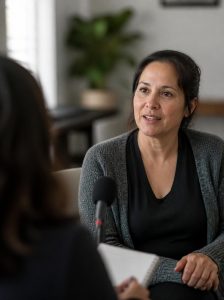
Because the films that raise money on the night are made weeks before it. Your fund-a-need video is shot at your programs, with interviews and releases, and edited in time for a tech check. That’s a story-film budget and timeline: Aktion’s nonprofit page puts a single video at six to ten weeks from kickoff to delivery.
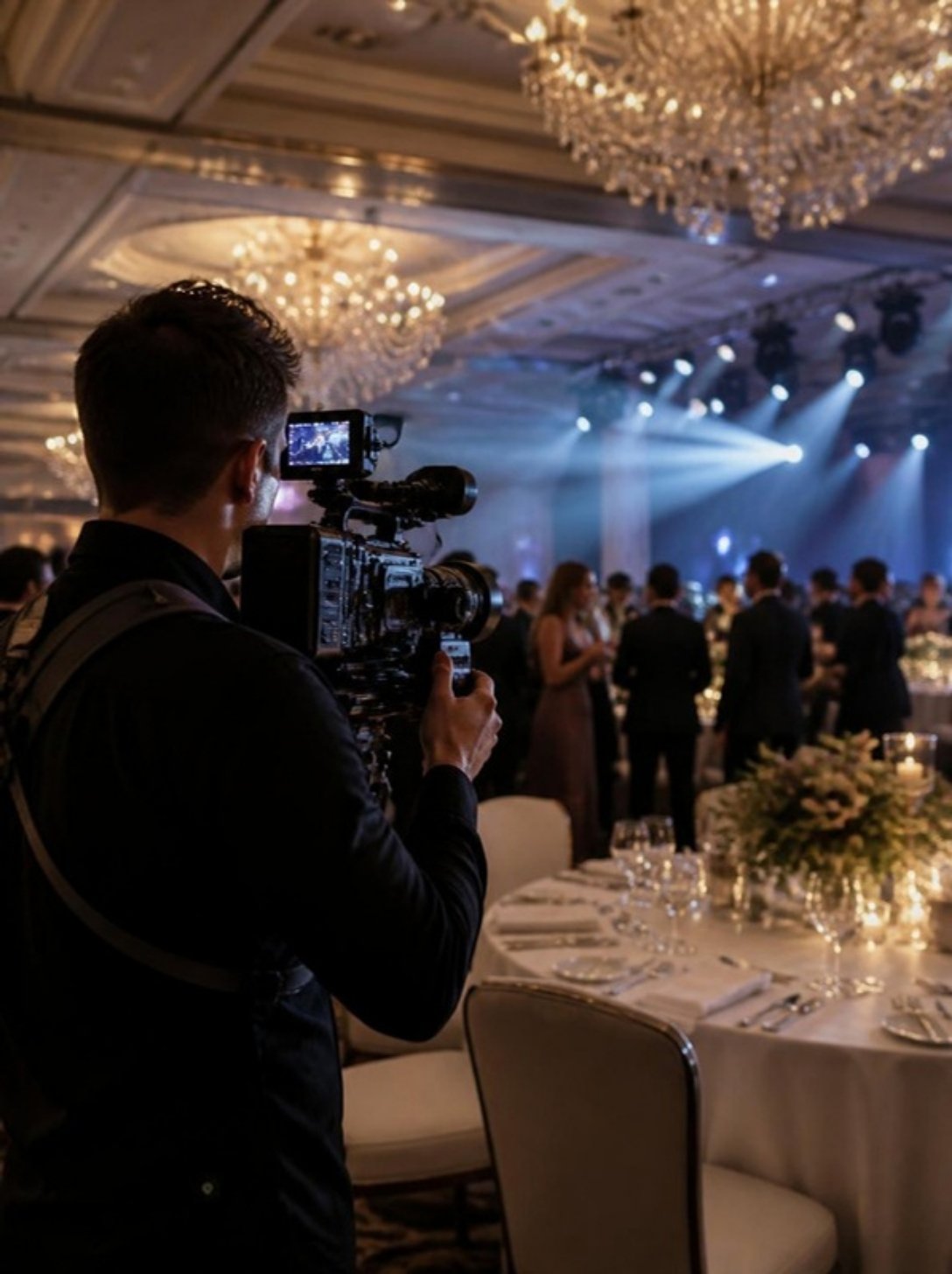
Night-of coverage is a different job: a crew captures speeches, the paddle raise, the room, and guest moments, and an editor cuts a recap afterward. It’s priced by hours, cameras, and how many edits you want.
Key takeaway: price the story film against what the paddle raise needs to bring in, and price the coverage against how you’ll use the footage for the rest of the year. They’re separate decisions.
Is gala video the same as gala AV?
No, and mixing them up is the easiest way to overpay. The AV company handles sound, screens, projectors, stage lighting, and often the cameras that put speakers on the big screens. MeyerPro, a gala AV company, puts AV for a gala of up to 200 guests at roughly $8,000 to $18,000, and notes that IMAG on side screens, a highlight reel, or a remote audience means planning “at least two cameras with a switcher.”
Before you sign two contracts, ask both vendors:
- Is the AV company already recording the program? A clean recording of the stage feed can save your video crew a camera.
- Who plays the fund-a-need film, and in what file format?
- Can the video crew take an audio feed from the soundboard? Board audio sounds far better than a camera microphone in a loud ballroom.
How much of the gala budget should go to video?
There’s no standard percentage, and anyone who quotes one is guessing. Start from the event’s economics instead. RallyUp, a fundraising-software company, puts the long-standing rule of thumb this way: keep total event costs between 30% and 50% of what the gala grosses, and treat 50 cents per dollar raised as the ceiling. Its example: “a gala expected to gross $60,000 should cost no more than $18,000–$30,000 all in.”
Video is one line inside that total, alongside the venue, food, AV, and the auctioneer. Two ways to make it earn its place:
- Tie the story film to the ask. If the fund-a-need goal is $100,000, a film that helps the room give a little more pays for itself on the night.
- Count the year, not the night. Footage reused in year-end appeals, grant applications, and next year’s sponsor deck spreads the cost across campaigns. Plan those versions before the shoot.
Can a sponsor pay for the gala video?
Yes, and it’s one of the easiest lines to underwrite. RallyUp recommends lining up sponsors to underwrite cost lines before you promote the event. A “video sponsor” gets a credit at the end of the recap and a thank-you from the stage, and the cost comes off your event’s cost-per-dollar math. Offer it alongside your other sponsorship levels.
Why do day rates look so high?
Because a day rate pays for far more than one day. The US Bureau of Labor Statistics puts the 2025 median pay for film and video editors and camera operators at $36.10 an hour, and reports that 35% are self-employed. A videographer’s rate also covers cameras, lenses, lights, audio gear, insurance, editing software, travel, and the days they aren’t booked.
Editing is the other big piece. Truscribe’s pricing guide notes that “a two-hour event can easily require 10–20 hours of editing,” and cites Clutch data showing US agencies typically bill $100 to $149 an hour. A two-minute recap isn’t two minutes of work.
What does gala video look like at three budget levels?
These are scopes, not quotes. Use them to decide what to ask for.
- Lean: one camera operator for the program (half day), a 60–90 second recap for social and email, and a fund-a-need film built from one shoot day. Skip the livestream and the same-night edit.
- Standard: two cameras so you catch both the stage and the room, a fund-a-need film, one honoree tribute, a 2–3 minute recap, and a 30-second sponsor cut.
- Flagship: a pre-gala shoot day for the story films, two or three cameras on the night, coordination with the AV company on IMAG, a livestream for remote donors, and a same-night sizzle to send while guests are still talking about it.
Where can you save without hurting the result?
- Book a package, not hours, if coverage runs long. Core Visuals, a New York studio, notes that “past roughly four hours, a package costs less than the same time billed hourly.”
- Film the story films and the coverage with one company so pre-production, music licensing, and the edit aren’t paid for twice.
- Skip the livestream if your donors are in the room. MeyerPro’s advice: “If your donors are in the room, consider recording only.”
- Avoid rush fees by locking the film’s content early. The tech check is the deadline, not gala day.
- Book early. Aktion’s event page recommends booking coverage 4 to 6 weeks ahead, and its nonprofit page recommends starting a produced film 10 to 12 weeks before it has to be live.
What should you ask before signing a gala video quote?
- How many cameras and operators, and for how many hours?
- Which edits are included: recap, sizzle, social cuts, sponsor cut, tribute?
- How many rounds of revisions?
- When does each edit arrive after the gala?
- Is music licensed for the room and for posting online?
- Who owns the raw footage, and will we get it?
- What’s the backup plan if a camera or the livestream fails?
Our guide to choosing a nonprofit video production company has more questions to ask.
Frequently asked questions
How much does a gala videographer cost?
For night-of coverage, published ranges run about $500 to $1,500 for one camera over a half day and $1,500 to $4,000 for two cameras over a full day, according to our event video cost guide. Edited deliverables, a livestream, and rush edits add to that.
Is a second camera worth it at a gala?
Usually, yes. One camera has to choose between the stage and the room, and the room (guests reacting, paddles going up) is what makes a recap feel alive. For a small dinner with a short program, one operator plus a locked-off camera on the stage can be enough.
Do we need to livestream our gala?
Only if you have donors who can’t attend and a plan to ask them to give. A livestream adds setup, a dedicated technician, and a reliable internet connection. If everyone you’re asking is in the room, record the program and send a recap instead.
How far ahead should we book gala video?
Book night-of coverage at least 4 to 6 weeks ahead, and earlier in the fall and spring gala seasons. Start any film you’ll show in the room, like a fund-a-need video, 10 to 12 weeks before the gala.
Do video production companies offer nonprofit rates?
Some do, and it’s worth asking. A better lever is scope: fewer edits, one shoot day planned to serve several uses, and a sponsor who underwrites the video. Our nonprofit video production cost guide covers how to read a quote.
Budgeting for your next gala?
Aktion Productions has filmed galas and produced impact stories for Florida nonprofits since 2007. See our pricing tiers, then tell us your gala date and what the night needs to raise.
Sources
- Aktion Productions, How much does event video production cost?, 2026
- Aktion Productions, How much does nonprofit video production cost?, 2026
- Happy Productions, How to plan a nonprofit gala recap video, 2026
- Truscribe, Event videography pricing guide, 2026
- MeyerPro, Gala AV budget guide, 2025
- RallyUp, How to plan a charity event, 2026
- US Bureau of Labor Statistics, Film and Video Editors and Camera Operators, Occupational Outlook Handbook
- Core Visuals, How much does event videography cost in NYC?, 2026
Related guides
- Nonprofit gala video: what to film before, during, and after
- Honoree tribute video: how to make one for your gala
- How to make a fund-a-need video for your gala
- How much does nonprofit video production cost?

Looking for a Top Rated Orlando Video Production Company?
Use Orlando's Trusted Choice
Don't settle for subpar video content. With years of experience in both corporate and creative video production, we are the trusted choice for Orlando video production. Whether you're looking to capture your brand's story or create compelling advertising campaigns, we have the expertise to make your vision a reality.