A hybrid gala livestream is worth doing only when you have donors who can’t be in the room and a plan to ask them to give online. Doing it well takes more than a camera and a link: a clean audio feed from the soundboard, a wired upload connection, an operator running the stream, someone hosting the online audience, and a giving page that works even if the video drops. Published vendor prices for a single-room stream start around $500 for one camera over a couple of hours and reach about $5,000 for two or three cameras, according to EventLive. That’s far below the large multi-room productions that make livestreaming sound expensive.
This guide is part of our nonprofit gala video series, and it goes deeper on the livestream question the series answers in one paragraph.
Should you livestream your gala at all?
Only if two things are true: some of the people you’re asking for money can’t attend, and you have a plan to ask them to give during the program. If everyone you’re asking is in the ballroom, record the program and send a recap instead. MeyerPro, a gala AV company, says it plainly: “If your donors are in the room, consider recording only.”
Fundraising IP, a nonprofit resource site, offers a useful test: “if most of your organization’s supporters live in the immediate area, it may be unnecessary to plan a hybrid gala.” The case gets stronger when your major donors live nearby but board members’ networks, alumni, or past program families are spread across the country.
There’s also a middle path. GalaBid, a fundraising platform, describes two hybrid models: online supporters bid and give on the platform with no stream at all, or a full stream with integrated fundraising. It notes that “Many organisations start with Model 1 for their first hybrid event and add streaming in subsequent years.” A giving-only hybrid costs almost nothing in video and tells you how many remote donors actually show up.
Is a hybrid gala still worth it in late 2026?
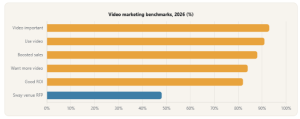
For some organizations, yes, but it’s no longer the default. The most cited data is a OneCause survey of 939 nonprofit employees, taken in September 2023 and reported by the Chronicle of Philanthropy in January 2024. “Eighty-three percent of respondents said their nonprofit plans to hold at least one in-person event in 2024. A third of groups plan to hold a hybrid one.” The largest share, 48 percent, said their events drew a mix of supporters who participated virtually and in person.
Virtual-only attendance collapsed: supporters attending only virtual events fell “from 28 percent in 2021 to 9 percent in 2022 and 5 percent last year.” That’s a vendor survey, and it’s now three years old, but the direction is clear. Pure virtual galas are over. Hybrid is a minority practice that works when it’s built for a real remote audience, not as a pandemic habit.
What crew and gear does a gala livestream take?
More than most chairs expect, because a stream is a live TV show running inside your live event. EMS Events, a UK gala streaming company, lists the full broadcast-style kit as professional cameras, microphones, audio mixing, a vision switcher, presentation playback, streaming encoders, monitoring, and reliable wired connectivity. A single-room gala usually needs a lean version of that.
| Role or gear | What it does |
|---|---|
| Two or three cameras One wide, one on the podium, one on the room | Lets the director cut from speaker to paddle raise to reactions |
| Switcher and operator Often called the technical director | Cuts between cameras live and plays your films and graphics to the stream |
| Encoder and stream tech | Sends the program to the platform and watches stream health all night |
| Audio feed from the soundboard | Clean speaker and video audio instead of a camera microphone in a loud room |
| Wired internet plus a backup | A dedicated upload line and a bonded cellular or hotspot fallback |
| Graphics | Giving link, QR code, and text-to-give number on screen during the ask |
| Online host and chat moderator | Talks to remote viewers, answers questions, thanks donors by name |
Audio matters more than the picture. GalaBid’s streaming guide puts it bluntly: “Viewers tolerate mediocre video and abandon bad audio within a minute.” It also warns that “A second camera helps if you have someone to switch between them, and hurts if you do not.” If the budget forces a choice, buy the audio feed and the operator before the third camera.
How much internet does a gala livestream need?
Plan for a wired, dedicated upload line, and test it in the room you’ll use. Here’s what the platforms publish:
- YouTube recommends a 1080p, 30 frames-per-second stream at 14 Mbps for H.264 video, with 5 Mbps as the minimum. For 720p at 30 fps, it recommends 8 Mbps, with 3 Mbps minimum. YouTube also says: “We recommend running a speed test to test your upload bitrate.”
- Facebook Live, per Meta’s developer documentation, recommends a video bitrate range of 3,000-6,000 Kbps for 1080p at 30 fps, and 1,500-4,000 Kbps for 720p.
- Zoom lists 3.8Mbps up and 3.0Mbps down for 1080p HD group video, and 2.6Mbps up for 720p HD.
These are the bitrates your encoder sends, so the venue’s measured upload speed needs to sit comfortably above the number you choose, with nobody else on that line. BC Live Productions, a live-production company, gives a rule of thumb for a full 1080p signal to YouTube: “Plan for a dedicated 10 Mbps circuit.” Don’t stream over guest wifi. As GalaBid notes, “Guest wifi at a venue is shared with several hundred phones.” And “Check upload speed rather than download,” because download is the number venues usually advertise.
Which platform should you stream on?
Pick the one your remote donors already know how to open, and set it up weeks ahead, because each platform has account rules that can stop a first-time stream.
- YouTube Live. Free, reliable, and easy to embed on your giving page. You can set the stream to unlisted so only people with the link can find it. Its help pages say: “To live stream, you need to have no live streaming restrictions in the past 90 days and you need to verify your channel.” Enable live streaming well before gala week.
- Facebook Live. Good if your supporters already follow your Page. Meta’s requirements: “The Facebook account must be at least 60 days old” and “The Facebook Page or professional mode profile must have at least 100 followers.”
- Zoom. Best for a small, invited audience you want to see and greet, like a watch party of board members’ guests. It feels like a meeting, not a broadcast.
- Your giving platform’s stream or embed. Many auction and giving platforms can show the video on the same page as the donate button. GalaBid’s advice: “Set it up so the fundraising page is the host and the video is the guest.”
Whichever you choose, send the link more than once. GalaBid observes that “Most no-shows at streamed events are people who could not find the link.”
How do remote donors give during the paddle raise?
The same way the room does: someone asks them directly, and giving takes one tap. Build these into the run-of-show:
- A host on camera for the online audience. A second emcee, or the auctioneer turning to the camera, who welcomes remote guests and makes the ask to them by name. GalaBid suggests acknowledging online guests “at least two or three times during the night.” Auctioneer Sarah Knox adds: “Thank virtual gala attendees by name during the fund-a-need!”
- The giving link on screen. A QR code and a text-to-give number as a graphic over the stream, held up for the entire ask.
- A giving page that doesn’t depend on the video. GalaBid’s rule: “the bidding must never depend on the video.”
- Keep the stream short. TravelPledge, an auction-travel company, recommends: “Keep your streamed presentation to an hour or less.” Don’t stream dinner service. Show a holding slide or a mission loop instead.
TravelPledge also notes that “many hybrid events will find the majority of their donations come from the fund-a-need,” so that’s the moment the stream must not miss. A live auction is harder to run across both audiences; many galas keep live-auction bidding in the room and open the fund-a-need to everyone.
Can you play the band or popular songs on the livestream?
Be careful, because this is where gala streams go dark. YouTube’s help page says: “All live streams are scanned for matches to third-party content.” When it finds a match, “a placeholder image may replace your live stream,” and if the music continues, “your live stream will be temporarily interrupted or terminated.” A cover band, the DJ’s walk-in playlist, or a hit song inside your fund-a-need film can all trigger it.
Licensing doesn’t automatically fix it. YouTube says that if a rights holder hasn’t added your channel to their allowlist, “your live stream can be interrupted even if you’ve licensed the third-party content.”
There’s a second wrinkle. ASCAP says the big platforms, “such as YouTube, Facebook and Instagram Live are already licensed by ASCAP,” which covers public performance on the platform. But ASCAP doesn’t license putting a song into a video (synchronization rights), so a song edited into your film needs separate permission. This isn’t legal advice. The practical fix: mute or cut away from the stream during dance sets, and use production music licensed for online use in every film you’ll play.
How do you play the fund-a-need film into the stream?
Send the film to the stream directly, not by pointing a camera at the ballroom screen. A camera shot of a projection looks washed out and sounds like an echo. Instead, the switcher plays the same file the AV company plays in the room, so remote donors see a clean picture with full audio.
Three things to settle in advance:
- Who plays it. One file, one cue, one named person. Agree whether the AV company or the stream switcher triggers it, and how the other follows.
- The file itself. Deliver it in the format both teams ask for, with backups on two drives.
- The music. If the film’s soundtrack isn’t cleared for online use, the stream can be blanked at the exact moment you ask for money.
Our guide to making a fund-a-need video for your gala covers the story, the giving-level tie-in, and the tech check.
Who does what: the video crew or the AV company?
Your AV company owns the room: sound, screens, projectors, lighting, and usually the cameras that put speakers on the big screens (called IMAG). The stream crew owns what remote donors see. Decide at the first joint call:
- Can the AV company provide a clean audio feed from the soundboard, and a video feed from its IMAG cameras?
- Who owns the switcher, and who plays the films and graphics to each output?
- Where will the stream table sit, with power and a wired line?
- When is the tech rehearsal, and is the stream included in it?
Sharing cameras and feeds can save you a camera operator. Two teams that never talked before load-in is how streams fail.
Key takeaway: remote donors judge your stream on two things, whether they can hear the speakers and whether they can find the giving link. Pay for the soundboard feed, a wired connection, and an online host before you pay for more cameras.
What’s the backup plan when the stream drops?
Assume it will hiccup and decide in advance what happens. GalaBid makes the key point: “A stream failure means online supporters lose the visual experience of the event, not their ability to bid or donate.” Use this checklist:
- Test end to end in the venue, at the same hour of day if you can, with audio and movement in the shot. YouTube advises that tests “should include audio and movement in the video similar to what you’ll be doing in the stream.”
- Run a private test stream to the real platform and watch it on a phone off the venue network.
- Have a backup connection ready: bonded cellular or a dedicated hotspot.
- Prepare a “We’ll be right back” slide the switcher can show instantly.
- Write the outage post in advance, with the giving link, so the online host can send it in seconds.
- Record locally on the switcher or a camera, so you have a full program even if the stream fails.
- Keep giving open after the event, and send the recording with the link to everyone who registered.
What does a gala livestream cost?
Published ranges vary widely, and each one prices a different job:
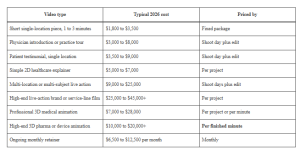
- EventLive (a streaming software company, 2026): “about $500–$1,500 for one camera for a couple of hours, and $1,500–$5,000 for two or three cameras.” Crew runs “about $100–$250 per person per hour,” and bonded internet for venues without reliable connectivity is “about $500–$3,000 a day.”
- Beverly Boy Productions (a video agency): production costs “can range from under $1,000 to over $5,000 per day,” with crew at “about $100-$200 per crew member, per hour.”
- BC Live Productions (2022, corporate focus): “1 Camera Stream: $2,000 – $6,000” and “3 Camera Stream: $5,000 – $25,000.”
- Truscribe (vendor examples, mainly San Francisco): “$800–$3,000 setup; $150–$300/day technician,” a minimal setup-plus-technician add-on to a filming package.
Why so wide? The number of cameras, since each usually means another operator. Crew hours, including load-in, rehearsal, and overtime, which EventLive says is usually charged at one and a half times the rate. Then graphics, a backup connection, the platform, and whether a rehearsal day is added.
Our event video production cost guide puts livestreams in a $25,000–$100,000+ large-production tier, but that tier is multi-room, multi-day, hybrid corporate work. A single-room gala stream is a much smaller job: most of the per-stream ranges above sit between several hundred and several thousand dollars, and even BC Live’s corporate three-camera range starts at $5,000. For how the stream fits next to coverage, the fund-a-need film, and the recap, see our full gala video cost guide, and for the films and the night as a whole, start with our nonprofit gala video guide.
Frequently asked questions
Is a hybrid gala worth it?
Only if you have donors who can’t attend and a plan to ask them to give online. In OneCause’s 2023 survey, reported by the Chronicle of Philanthropy, a third of nonprofits planned a hybrid event for 2024, while virtual-only attendance had dropped to 5 percent. If your donors are local, record the program and send a recap instead.
How much does it cost to livestream a gala?
EventLive puts one camera for a couple of hours at about $500 to $1,500, and two or three cameras at $1,500 to $5,000. Beverly Boy’s range runs from under $1,000 to over $5,000 per day. Backup internet, graphics, rehearsal, and overtime push a quote toward the top of those ranges.
What internet speed do we need to livestream from the venue?
YouTube recommends 14 Mbps for a 1080p stream at 30 fps, with 5 Mbps as the minimum, and the venue’s upload speed needs headroom above whatever bitrate you choose. Ask for a wired, dedicated line, not guest wifi, and run a speed test in the ballroom before the event.
Can we stream the band or play popular songs on the livestream?
Not safely on YouTube without permission. YouTube scans all live streams for third-party content and can replace or interrupt yours, even if you’ve licensed the music, unless the rights holder has allowlisted your channel. Cut away from dance sets and use production music licensed for online use in your films.
What happens if the livestream drops?
The picture stops, but the giving shouldn’t. Keep the giving page separate from the video, have a backup connection and a “we’ll be right back” slide ready, and post the giving link to online guests right away. Record the program locally so you can send it afterward.
Planning a hybrid gala?
Aktion’s event video production team handles livestreams alongside your AV company and works with your planners, and has filmed for Florida nonprofits since 2007. Tell us your gala date and who you need to reach.
Sources
- MeyerPro, Gala AV budget guide, 2025
- Emily Haynes, “Nonprofits That Host In-Person and Hybrid Events Raise More Money,” Chronicle of Philanthropy, 2024 (OneCause survey)
- Fundraising IP, 8 steps to planning an excellent hybrid nonprofit gala, 2024
- GalaBid, Hybrid fundraising events: how to include online supporters in your gala, 2026
- GalaBid, Live streaming a fundraising event: tickets, bidding and the ask, 2026
- TravelPledge, The definitive guide to hybrid galas, 2020
- Sarah Knox, 5 things to plan your hybrid fundraising gala, 2021
- EMS Events, Gala dinners live streaming
- YouTube Help, Choose live encoder settings, bitrates, and resolutions
- YouTube Help, Get started with live streaming
- YouTube Help, Live stream copyright issues
- Meta for Developers, Live Video API reference
- Zoom Support, Zoom system requirements: Windows, macOS, Linux
- ASCAP licensing FAQ
- EventLive, How much does it cost to live stream an event?, 2026
- Beverly Boy Productions, How much does it cost to livestream an event?, 2026
- BC Live Productions, How much does a live stream cost?, 2022
- Truscribe, Event videography pricing guide, 2026
Related guides
- Nonprofit gala video: what to film before, during, and after
- How much does gala video cost?
- How to make a fund-a-need video for your gala
- How much does event video production cost?

Looking for a Top Rated Orlando Video Production Company?
Use Orlando's Trusted Choice
Don't settle for subpar video content. With years of experience in both corporate and creative video production, we are the trusted choice for Orlando video production. Whether you're looking to capture your brand's story or create compelling advertising campaigns, we have the expertise to make your vision a reality.