A capital campaign video is really a set of videos timed to the campaign: a private case video for one-on-one asks during the quiet phase, a public launch video, short progress updates, and a thank-you film when the doors open. Most organizations wait until the public launch to think about video. That’s late. The quiet phase is where most of the money is raised, and the “before” footage of your old building disappears the day construction starts.
This guide is part of our nonprofit video production series. It covers what to film, in what order, and how to get several campaign videos out of a few planned shoot days.
What is a capital campaign video?
A capital campaign video is a short film that makes the case for a major, time-bound fundraising campaign, usually for a building, a renovation, land, or an endowment. It turns your case for support into something a donor can see: the need, the space, the people it serves, and what changes when the project is finished.
It’s different from an annual appeal video. An annual appeal asks for this year’s gift. A capital campaign asks a small group of people for the largest gifts they’ve ever made, over several years, for something that doesn’t exist yet. The video has to make an empty lot or a set of renderings feel real.
Why does the quiet phase matter so much for video?
Because that’s where the campaign is won. In the quiet phase, leadership and major donors are asked first, before the campaign is announced. Bloomerang’s capital campaign guide cites industry guidance to raise roughly 75% of the goal before going public. Graham-Pelton’s Aaron Dahlstrom, writing for Giving USA, puts it at at least 65%. Either way, most of the money is committed in private meetings, long before any public video exists.
Dahlstrom also notes that the case for support is “most immediately useful in quiet phase meetings and solicitations.” A short case video does the same job on a laptop or tablet in a donor’s living room: it shows the need in two or three minutes so the conversation can move to the ask.
Which videos does a capital campaign need?
Plan these as one production, not five separate projects:
| Video | When and what it does |
|---|---|
| Quiet-phase case video | Shown privately in leadership and major-gift meetings. Makes the case: the need, the plan, the people it serves. |
| Public launch video | Premieres at the kickoff event, then lives on the campaign page. Announces the goal and the progress so far. |
| Progress updates | 30–90 second clips for email and social: groundbreaking, milestones, “we’re 80% there.” |
| Donor thank-you | Sent to donors during and after the campaign. Shows what their gifts are building. |
| Opening or dedication film | Plays at the ribbon cutting. Closes the story the first video opened. |
Not every campaign needs all five. A small renovation campaign might use one case video, a launch cut, and a few phone-shot updates. But deciding the full set up front is what lets one shoot day serve several of them.
When should you film each part of the campaign?
Campaigns are long. Bloomerang cites the 2023 Capital Campaign Benchmark Report’s average of about 3.2 years from start to finish, and its example timeline gives the quiet phase 12–18 months and the public phase 6–12 months. Map your video work onto those phases:
- Planning and feasibility: scope the video set. Once the case for support is drafted, decide which videos you need and who should be on camera. Aktion’s nonprofit page puts a single video at six to ten weeks from kickoff to delivery, so start at least 10 to 12 weeks before your first leadership meeting.
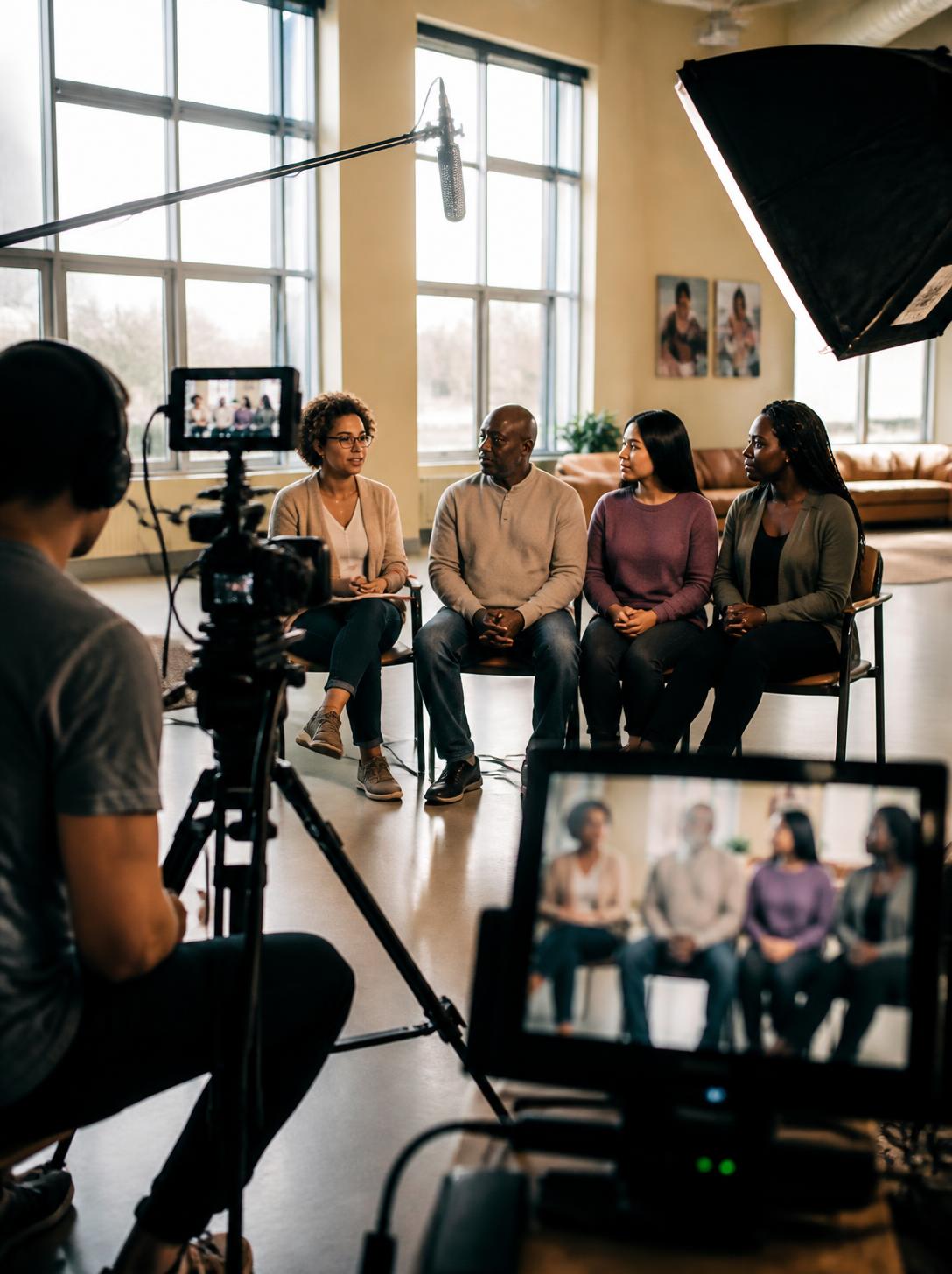
- Early quiet phase: film the case video and the “before.” Interview your ED, a board leader, staff, and the people your program serves. Film the current building, the waitlist, the cramped room, the leaking roof, whatever makes the need visible.
- Late quiet phase: capture early commitments. If lead donors are willing, a short interview about why they gave becomes powerful public-phase material. Ask, don’t assume.
- Public launch: premiere the launch video. Re-cut the case video with the announced goal, the amount already raised, and an invitation for everyone to join.
- Construction: film milestones. Groundbreaking, framing, the first room finished. Short updates keep the public phase moving and give donors proof their money is turning into something.
- Opening: film the first day in the new space. The same people from the “before” footage, now in the finished building. That’s your dedication film and your strongest stewardship piece.
What should you film before construction starts?
This is the footage you can’t get back. Shoot it during the quiet phase, even if the public video is a year away:
- The current space at its most honest. The overflowing storage closet, the hallway used as an office, the families waiting outside.
- A normal program day. The work happening in spite of the building, not staged for the camera.
- The empty lot or the building as it stands, including drone or wide exterior shots if the site allows it.
- Interviews with people who will still be there at the opening, so you can film them again in the new space.
- Locked-off “matching” shots: the same angle from the same spot, so the opening film can cut from old to new.
What should the quiet-phase case video say?
Build it from the case for support, not from a blank page. Dahlstrom describes the case as the shared statement your messaging comes from: mission, audience, narrative, data, and anecdotes. The video takes the strongest of those and puts faces on them. A simple structure that works in a meeting:
- The need today, shown in the real space and told by someone who lives it.
- The plan, in plain language: what you’ll build and why this is the right answer.
- What changes, told as one person’s future, not a list of square feet.
- Leadership’s commitment, a short line from the board chair or ED.
- A quiet close that hands the conversation back to the person making the ask.
Leave the goal amount and the gift chart out of the quiet-phase cut. Those change, and the solicitor should present them in person. Keeping the numbers out also means you don’t have to re-edit the video every time the plan shifts.
Should you use renderings or real footage?
Both, in that order of importance: real footage first, renderings second. Graham-Pelton’s list of public-phase materials includes project renderings alongside the campaign website, brochures, and a public-facing case. Renderings show the future. Real footage of real people shows why the future matters. A video that is all architecture fly-throughs feels like a real estate ad. Use the renderings for a few seconds near the “plan” beat, and keep the rest of the film on people.
Key takeaway: Film the “before” during the quiet phase. Renderings can be redrawn at any time, but the old building and the people working in it are gone once construction starts.
How do you budget for capital campaign video?
Budget for the set, not a single video. The biggest savings come from planning versions before the first shoot: one day of interviews and program footage can produce the case video, the launch cut, and several social clips, as long as the crew knows that’s the plan. Later milestones (groundbreaking, opening) are separate, shorter shoot days. Our guide to nonprofit video production cost breaks down how shoot days, locations, and versions change the number.
If you’re comparing crews for a multi-year campaign, ask how they’d keep the look consistent from the first shoot to the opening, and whether they’ll keep your raw footage archived. Our guide on how to choose a nonprofit video production company has the full list of questions.
Frequently asked questions
Should the quiet-phase video be public?
No. The quiet phase exists so you can secure leadership gifts before the campaign is announced, so the case video is shown privately in meetings and not posted online. Once the campaign goes public, re-cut it with the goal and progress and publish that version instead.
How long should a capital campaign video be?
Keep the case video to about two or three minutes so it supports the meeting instead of taking it over. Launch videos can run a little longer if they premiere at an event. Progress updates for email and social work best at 30 to 90 seconds.
Can we film the campaign video ourselves?
Progress updates, yes: a phone and a steady hand are fine for a groundbreaking clip. The quiet-phase case video is different. It’s shown to the people being asked for the largest gifts in the campaign, so it’s usually worth a professional crew, clean interview audio, and a planned shoot.
Do we need releases from the people we film?
Yes. Get a signed release from everyone on camera, guardian consent for minors, and a clear plan for anyone who needs to stay anonymous. Because a capital campaign runs for years, tell people up front that their interview may appear in several versions over the life of the campaign. Run the release language past your own counsel. This guide isn’t legal advice.
Planning a capital campaign?
Aktion plans capital campaign video as one production for nonprofits in Orlando and across Florida: the quiet-phase case video, the launch cut, and the milestone shoots, filmed so the story holds together from the first interview to the ribbon cutting. See our nonprofit video production page for everything we make for mission-driven teams, then book a shoot to get the “before” on camera.
Sources
- Bloomerang, Capital Campaign (nonprofit glossary) (quiet phase share, phase lengths, 2023 Capital Campaign Benchmark Report average)
- Aaron Dahlstrom, Graham-Pelton, for Giving USA, Achieving Clear Messaging During Capital Campaigns: 5 Steps
- Aktion Productions, Non Profit Video Production (timeline, releases, multi-version shoot days)
Related guides
- How much does nonprofit video production cost?
- How to choose a nonprofit video production company
- How to make a fund-a-need video for your gala
- Nonprofit storytelling video consent
- Nonprofit video production in Orlando

Looking for a Top Rated Orlando Video Production Company?
Use Orlando's Trusted Choice
Don't settle for subpar video content. With years of experience in both corporate and creative video production, we are the trusted choice for Orlando video production. Whether you're looking to capture your brand's story or create compelling advertising campaigns, we have the expertise to make your vision a reality.